Siberian Tiger: The Lone Ranger Life in Transnational Conservation Areas"

Jun 11, 2025 By

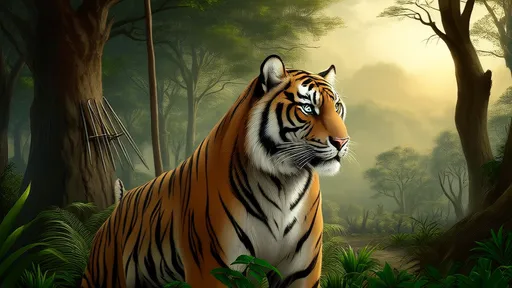
The Siberian tiger, known scientifically as Panthera tigris altaica, is one of the most elusive and majestic creatures roaming the forests of Northeast Asia. These solitary predators, often referred to as the "kings of the taiga," navigate vast territories that stretch across international borders, making their conservation a complex, multinational effort. Their survival hinges not just on the preservation of habitat but on the delicate balance of ecosystems that span Russia, China, and potentially the Korean Peninsula.

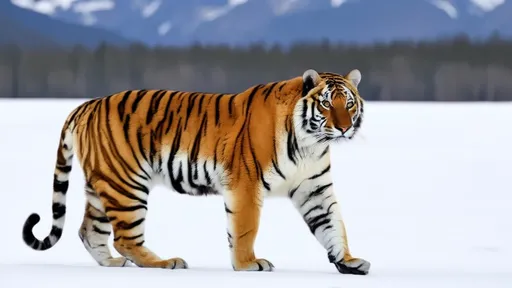
Unlike their tropical cousins, Siberian tigers have adapted to the harsh climates of the Russian Far East and Northeast China. Their thick fur, large paws, and impressive size—males can weigh over 600 pounds—allow them to thrive in snow-covered landscapes. Yet, despite their physical resilience, these tigers face relentless threats from poaching, habitat fragmentation, and human encroachment. The creation of transnational protected areas has become a critical strategy in ensuring their future.

The life of a Siberian tiger is one of solitude and vast wanderings. A single male’s territory can cover hundreds of square miles, overlapping with several females but fiercely defended against rival males. Their movements are dictated by the availability of prey—primarily deer and wild boar—and the need to avoid human settlements. Researchers tracking these tigers have documented astonishing journeys, with some individuals crossing mountain ranges and rivers in search of new territory.

One of the most remarkable aspects of their behavior is their ability to traverse international borders. In recent years, tigers have been spotted in China’s Heilongjiang and Jilin provinces, areas where they had been absent for decades. These sightings are a testament to the success of conservation programs in Russia, where tiger populations have slowly rebounded. However, the tigers’ expansion into China also highlights the need for coordinated protection efforts between the two countries.

The challenges of cross-border conservation are immense. Political, legal, and cultural differences can hinder collaboration, yet the tigers themselves recognize no boundaries. Anti-poaching patrols, habitat restoration, and community engagement programs must operate seamlessly across borders to be effective. Organizations like the World Wildlife Fund (WWF) and local conservation groups have been instrumental in fostering cooperation, but the work is far from over.

Another pressing issue is the genetic diversity of the Siberian tiger population. With fewer than 600 individuals left in the wild, inbreeding poses a serious risk. Transboundary corridors—stretches of protected land linking separate habitats—are essential to allowing tigers to mix and maintain healthy genetic variation. Without these pathways, isolated subpopulations could face extinction even if their numbers appear stable in the short term.

Local communities play a pivotal role in the tigers’ survival. In many regions, tigers are both feared and revered. Livestock predation can lead to conflicts, but education and compensation programs have helped shift perceptions. When communities benefit from ecotourism or sustainable forestry, they become active participants in conservation rather than adversaries. The Amur Tiger Center in Russia, for example, has worked extensively with villagers to reduce human-tiger conflicts.

Technology has revolutionized tiger conservation. Camera traps, satellite collars, and DNA analysis provide unprecedented insights into their behavior and movements. Scientists can now track individual tigers across vast distances, monitor their health, and even identify potential threats before they escalate. This data is invaluable for shaping policies and allocating resources where they are needed most.

Despite the progress, the Siberian tiger’s future remains uncertain. Climate change looms as a new threat, altering the forests they depend on and potentially pushing prey species further north. Illegal wildlife trade, though diminished, still claims lives. The tigers’ fate is intertwined with the political will of nations and the global community’s commitment to preserving biodiversity.

Yet, there is hope. The return of tigers to parts of China shows that recovery is possible. International agreements, like the Sino-Russian treaty on tiger conservation, set a precedent for other endangered species. Every sighting, every successful breeding season, is a victory—a reminder that even the most solitary of creatures depends on the collective efforts of humanity.

The Siberian tiger is more than just a symbol of wilderness; it is a barometer of ecological health. Protecting these solitary wanderers means safeguarding entire ecosystems. Their survival is not just a regional concern but a global responsibility—one that demands cooperation, innovation, and unwavering dedication.
Recommend Posts
Animal

White Tiger: A Snowy Hunter Born of Genetic Mutation"

By /Jun 11, 2025

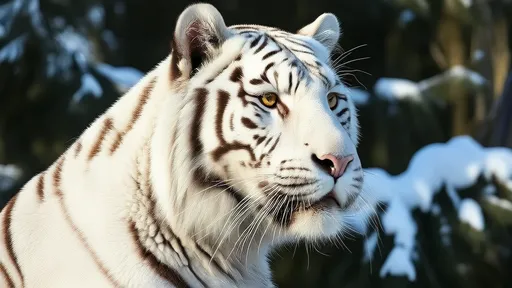
The white tiger stands as one of nature's most mesmerizing anomalies—a creature of myth and legend, yet very much real. Its snow-white fur, piercing blue eyes, and dark stripes make it an unforgettable sight. But behind its striking appearance lies a fascinating genetic story, one that reveals the delicate balance between beauty and survival in the wild.
Animal

The Tragedy and Hope of the Extinct Wild South China Tiger

By /Jun 11, 2025

The South China tiger, once a majestic symbol of China's wilderness, now exists only in captivity. Its disappearance from the wild stands as a stark reminder of the consequences of habitat destruction, human encroachment, and unchecked hunting. For decades, conservationists have grappled with the reality of its extinction in the wild, yet a flicker of hope remains. The story of this elusive big cat is one of tragedy, but also of resilience and the possibility of redemption.
Animal

Sumatran Tiger: Survival Techniques of the Smallest Subspecies in the Jungle

By /Jun 11, 2025

The dense jungles of Sumatra are home to one of nature's most elusive and endangered predators: the Sumatran tiger. As the smallest surviving tiger subspecies, Panthera tigris sumatrae has evolved remarkable adaptations to thrive in an environment where stealth, patience, and raw power determine survival. Unlike their larger cousins in Siberia or Bengal, these tigers navigate a world of tangled vegetation, unpredictable prey, and increasing human encroachment. Their existence represents both a biological marvel and a conservation crisis unfolding beneath the rainforest canopy.
Animal

Bengal Tiger: The Swimming Champion of Mangroves

By /Jun 11, 2025

The Sundarbans, a vast mangrove forest straddling the border of India and Bangladesh, is home to one of nature’s most awe-inspiring creatures: the Bengal tiger. Unlike their terrestrial cousins, these tigers have adapted to a unique aquatic lifestyle, earning them the title of "swimming champions of the mangroves." Their ability to navigate the labyrinthine waterways with ease sets them apart, making them a fascinating subject of study and conservation efforts.
Animal

Siberian Tiger: The Lone Ranger Life in Transnational Conservation Areas"

By /Jun 11, 2025

The Siberian tiger, known scientifically as Panthera tigris altaica, is one of the most elusive and majestic creatures roaming the forests of Northeast Asia. These solitary predators, often referred to as the "kings of the taiga," navigate vast territories that stretch across international borders, making their conservation a complex, multinational effort. Their survival hinges not just on the preservation of habitat but on the delicate balance of ecosystems that span Russia, China, and potentially the Korean Peninsula.
Animal

Greenland Shark: Slow Metabolism's Deep-Sea Sluggard

By /Jun 11, 2025

In the perpetual darkness of the deep ocean, where pressure crushes all but the most resilient creatures, the Greenland shark (Somniosus microcephalus) glides through the icy waters with an almost eerie lethargy. This enigmatic species, often called the "sleeper shark" for its sluggish movements, has fascinated biologists for decades. But what truly sets it apart isn’t just its slow pace—it’s the shark’s astonishingly low metabolic rate, a trait that allows it to survive in one of Earth’s most inhospitable environments while outliving nearly every other vertebrate.
Animal

Nurse Shark: Vacuum-Style Feeding in the Sea Floor

By /Jun 11, 2025

The ocean floor is home to some of the most fascinating and peculiar creatures, but few are as intriguing as the nurse shark. Often referred to as the "vacuum cleaners of the sea," these slow-moving predators have developed a unique feeding strategy that sets them apart from their more aggressive cousins. Unlike the great white or the tiger shark, nurse sharks don’t rely on speed or brute force to catch their prey. Instead, they’ve perfected the art of suction feeding, a method that allows them to hoover up meals with remarkable efficiency.
Animal

Bull Shark: The Ferocious Freshwater-Adapting Predator

By /Jun 11, 2025

The bull shark, often regarded as one of the most formidable predators in the aquatic world, possesses a unique ability that sets it apart from its oceanic counterparts—the capacity to thrive in freshwater environments. Unlike most sharks, which are confined to saltwater habitats, the bull shark can navigate rivers, lakes, and even flooded urban areas with terrifying ease. This adaptability, combined with its aggressive nature, has earned it a fearsome reputation among both scientists and locals in regions where it is found.
Animal

The Greenland Shark: A 400-Year-Old Polar Resident

By /Jun 11, 2025

In the icy depths of the Arctic Ocean, a mysterious giant glides silently through the freezing waters. The Greenland shark, a creature that has captured the imagination of scientists and adventurers alike, is not just any ordinary predator. It holds a secret that defies the very laws of life and death—an astonishing lifespan that can stretch beyond 400 years, making it the longest-living vertebrate known to science.
Animal

Hammerhead Sharks: Stereo Vision with a T-Shaped Head

By /Jun 11, 2025

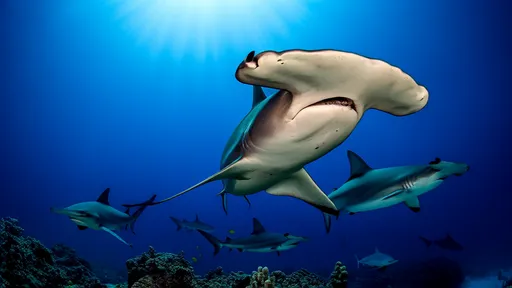
The hammerhead shark stands as one of the ocean’s most enigmatic predators, instantly recognizable by its bizarre, T-shaped head. Unlike the streamlined silhouettes of most sharks, the hammerhead’s flattened, wide-set eyes and peculiar cranial structure have long puzzled scientists and marine enthusiasts alike. This evolutionary marvel isn’t just for show—it serves a critical purpose, granting the shark an unparalleled advantage in the underwater world: three-dimensional vision.
Animal

Tiger Shark: The Omnivorous King of Ocean Trash Bins

By /Jun 11, 2025

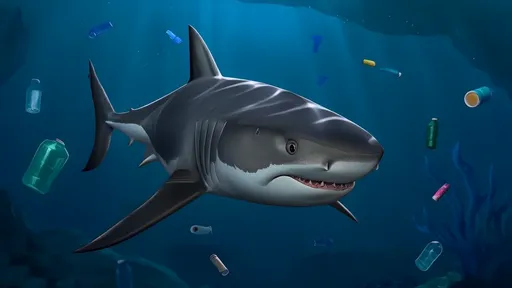
The ocean’s vast expanse hides countless mysteries, but few creatures embody its raw, unfiltered nature quite like the tiger shark. Known as the "garbage can of the sea," this apex predator thrives on an indiscriminate diet, consuming everything from sea turtles to license plates. Its reputation as a scavenger of the deep is both a testament to its adaptability and a grim reflection of human impact on marine ecosystems. Unlike other sharks that specialize in specific prey, the tiger shark’s culinary curiosity makes it a fascinating—and fearsome—force beneath the waves.
Animal

Whale Shark: The Filter-Feeding Gentle Giant of the Oceans

By /Jun 11, 2025

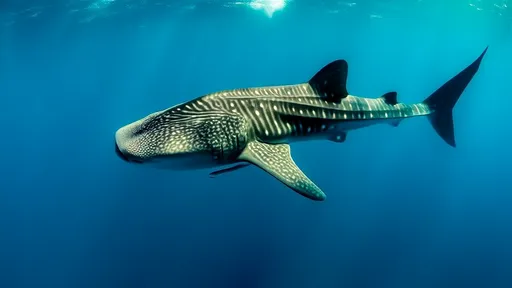
The ocean holds many mysteries, but few creatures capture the imagination quite like the whale shark. As the largest fish in the sea, this gentle giant glides through tropical waters with an almost otherworldly grace. Unlike its more predatory cousins, the whale shark is a filter feeder, sustaining itself on some of the smallest organisms in the marine ecosystem. Its sheer size—often exceeding 40 feet in length—combined with its docile nature makes it a favorite among divers and marine biologists alike.
Animal

Flame Shrimp: Bright Red Coral Symbionts

By /Jun 11, 2025

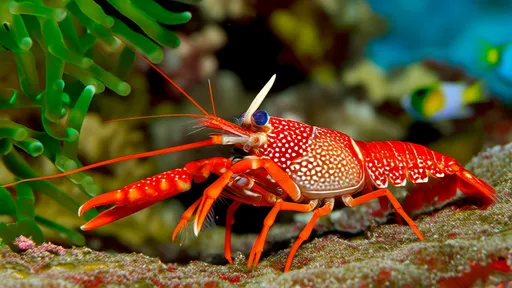
The flame shrimp, with its striking crimson coloration, is one of the ocean's most visually captivating crustaceans. Known scientifically as Lysmata debelius, this species has earned its common name from the fiery red hues that adorn its slender body. Found predominantly in coral reef ecosystems, the flame shrimp is not just a beautiful sight but also an intriguing example of symbiotic relationships in marine environments.
Animal

Ghost Shrimp: The Transparent Camouflage of a Sand-Digger Expert

By /Jun 11, 2025

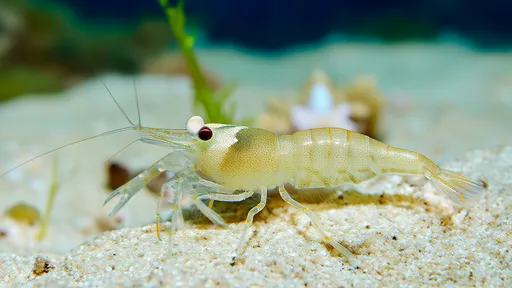
The ocean's sandy floors are home to some of nature's most elusive and fascinating creatures, and among them, the ghost shrimp stands out as a master of both disguise and engineering. These translucent crustaceans, often overlooked due to their nearly invisible appearance, are far more than just delicate specters drifting through the water. They are skilled architects, relentless burrowers, and survivors in an environment where predators lurk at every turn. Their existence is a delicate balance of transparency and activity—a paradox that makes them one of the ocean's most intriguing inhabitants.
Animal

Pistol Shrimp: Bubble Burst Generates High-Temperature Acoustic Weapon

By /Jun 11, 2025

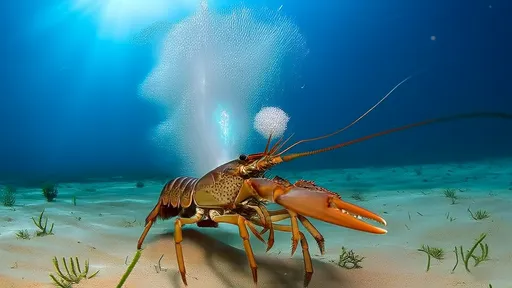
The ocean is home to some of nature's most extraordinary phenomena, and among its many wonders, the pistol shrimp stands out as a creature that seems to defy the laws of physics. This small but mighty crustacean, also known as the snapping shrimp, possesses a unique ability to generate intense heat and powerful shockwaves with a simple snap of its claw. The mechanism behind this natural weapon has fascinated scientists and engineers alike, inspiring innovations in fields ranging from military technology to medical research.
Animal

Bee Shrimp: Tiny Black and Yellow Striped Cleaners

By /Jun 11, 2025

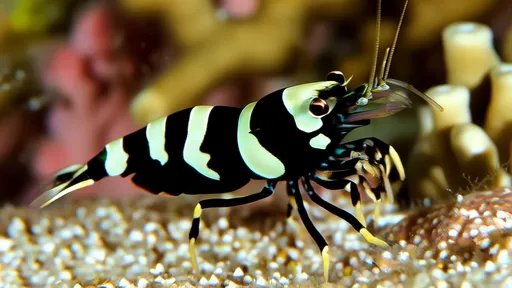
In the bustling underwater world of coral reefs, an unlikely partnership thrives between fish and a tiny striped crustacean known as the Bumblebee Shrimp (Gnathophyllum americanum). With its striking black and yellow bands, this diminutive cleaner resembles a bumblebee in motion, darting between coral branches and even hitching rides on larger marine creatures. But don’t let its whimsical appearance fool you—this shrimp plays a critical role in maintaining the health of its ecosystem by offering cleaning services to fish willing to tolerate its presence.
Animal

Glass Shrimp: Transparent Body Internal Perspective

By /Jun 11, 2025

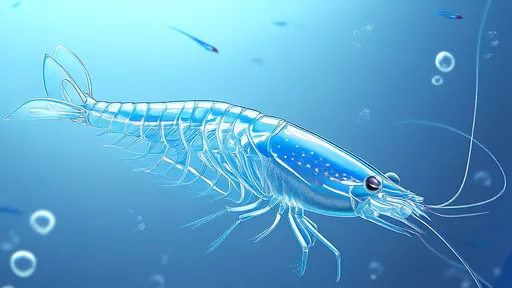
The ocean depths hold countless mysteries, but few creatures capture the imagination quite like the glass shrimp. With bodies so transparent they seem to vanish against the water, these delicate crustaceans offer a rare glimpse into the inner workings of life itself. Their near-invisible forms drift through tropical and subtropical waters worldwide, surviving through a combination of evolutionary ingenuity and sheer biological audacity.