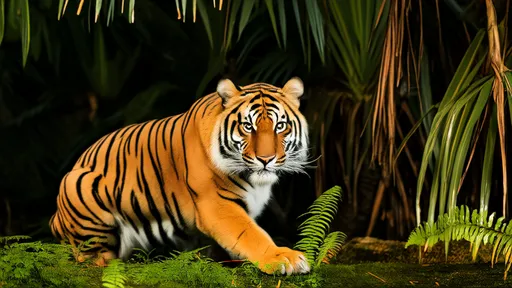
The South China tiger, once a majestic symbol of China's wilderness, now exists only in captivity. Its disappearance from the wild stands as a stark reminder of the consequences of habitat destruction, human encroachment, and unchecked hunting. For decades, conservationists have grappled with the reality of its extinction in the wild, yet a flicker of hope remains. The story of this elusive big cat is one of tragedy, but also of resilience and the possibility of redemption.
Known scientifically as Panthera tigris amoyensis, the South China tiger was once widespread across the forests and mountains of southern China. Its distinctive stripes and powerful build made it a cultural icon, revered in folklore and art. Yet, by the late 20th century, the species had vanished from its natural habitat. Deforestation, agricultural expansion, and relentless poaching drove it to the brink. Unlike other tiger subspecies that still roam free in parts of Asia, the South China tiger's wild population was declared functionally extinct in the 1990s.
The decline was rapid and brutal. In the 1950s, an estimated 4,000 South China tigers prowled the dense forests. By the 1980s, that number had plummeted to fewer than 100. The Chinese government, recognizing the crisis, banned hunting in 1979 and listed the tiger as a protected species. But the measures came too late. The last confirmed sighting of a wild South China tiger was in the early 2000s, and even that report was met with skepticism. The once-proud predator had slipped into the shadows, surviving only in zoos and breeding centers.
Despite its absence from the wild, the South China tiger has not been forgotten. Conservation programs, both in China and abroad, have worked tirelessly to preserve the genetic lineage of this subspecies. Captive breeding initiatives, though challenging, have seen modest success. A handful of facilities, such as the Laohu Valley Reserve in South Africa, have even experimented with rewilding—training captive-born tigers to hunt and survive in natural environments. These efforts, while controversial, offer a glimmer of hope that one day the South China tiger might reclaim its place in the wild.
The road to recovery is fraught with obstacles. Genetic diversity among captive tigers is limited, raising concerns about inbreeding and long-term viability. Reintroduction into the wild would require not only suitable habitat but also a significant shift in local attitudes and policies. Human-wildlife conflict remains a major barrier, as rural communities are unlikely to welcome the return of a large predator. Yet, the symbolic importance of the South China tiger cannot be overstated. Its potential revival would represent a triumph of conservation and a testament to humanity's ability to correct past mistakes.
In recent years, there have been whispers of hope—unverified reports of tiger sightings in remote regions of China. While these accounts are often dismissed as wishful thinking, they underscore the deep emotional connection people still feel to this lost icon. The South China tiger's story is far from over. Whether it ends in tragedy or redemption depends on the choices we make today. For now, the tiger's fate hangs in the balance, a silent ghost of the forests it once ruled.

By /Jun 11, 2025

By /Jun 11, 2025
By /Jun 11, 2025

By /Jun 11, 2025

By /Jun 11, 2025

By /Jun 11, 2025

By /Jun 11, 2025

By /Jun 11, 2025

By /Jun 11, 2025

By /Jun 11, 2025

By /Jun 11, 2025

By /Jun 11, 2025
By /Jun 11, 2025

By /Jun 11, 2025

By /Jun 11, 2025
By /Jun 11, 2025

By /Jun 11, 2025