The automotive industry's rapid shift toward electrification has brought unprecedented challenges and opportunities in noise, vibration, and harshness (NVH) engineering. Among the emerging solutions, acoustic glass has quietly emerged as a critical battleground for automakers striving to redefine cabin comfort in the electric vehicle (EV) era. Unlike traditional internal combustion engine vehicles where engine noise dominates, EVs expose previously masked sounds—wind noise, tire roar, and even the whine of electric motors—making advanced acoustic materials no longer a luxury but a necessity.
At first glance, acoustic glass might appear as just another component in a vehicle's extensive NVH countermeasures. However, its role is far more strategic. Modern acoustic laminated glass typically consists of two or more layers of glass bonded with a specialized sound-damping interlayer, often polyvinyl butyral (PVB) or ethylene-vinyl acetate (EVA). This construction doesn't merely block noise; it disrupts sound wave transmission through viscoelastic energy dissipation. The result is a 6-10 dB reduction in high-frequency noise penetration—a figure that makes the difference between a serene cabin and one where every passing truck feels intrusively present.
What makes acoustic glass particularly fascinating is how its development parallels the unique NVH profile of electric vehicles. With the absence of engine masking noise, frequencies between 1,000-5,000 Hz—where wind and tire noise predominantly live—become glaringly apparent. Traditional insulation methods struggle with these mid-to-high frequencies, but acoustic glass's constrained layer damping effect targets them precisely. Automakers are discovering that upgrading from standard laminated glass to advanced acoustic variants can deliver perceived quietness improvements disproportionate to the actual decibel reduction, thanks to how human hearing prioritizes certain frequency ranges.
The technology isn't without its trade-offs. Adding mass to vehicle glazing runs counter to lightweighting efforts crucial for EV range optimization. A typical acoustic windshield might weigh 20-30% more than conventional laminated glass. This has spurred material science innovations, such as thin but stiff glass chemistries and nano-engineered interlayers that achieve superior acoustic performance with minimal weight penalty. Some manufacturers are even exploring graded impedance designs where the interlayer's thickness varies across the glass surface to address specific noise intrusion points like the A-pillars or roof seams.
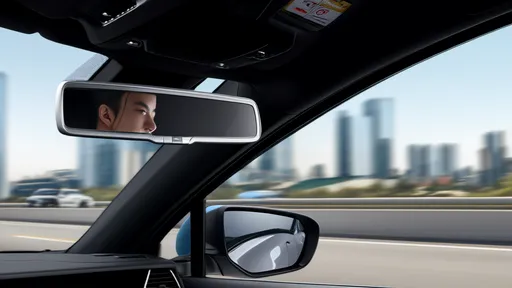
Beyond pure acoustics, the role of glass in EVs is undergoing a philosophical shift. As vehicles become mobile living spaces—places for productivity or relaxation during charging—the expectations for isolation from the external environment intensify. This explains why premium EVs increasingly feature panoramic glass roofs with acoustic treatments, transforming what could be an NVH liability into a brand-defining comfort feature. The glass itself becomes an active participant in the cabin's sonic signature, not just a barrier against unwanted noise.
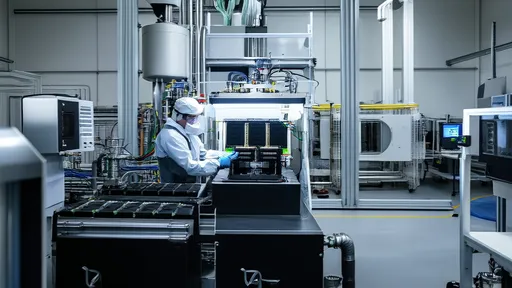
Manufacturing complexities add another layer to this quiet revolution. Unlike metal panels where sound insulation can be adjusted during assembly, acoustic glass's performance is baked in during production. This demands unprecedented collaboration between glass suppliers, automakers, and NVH engineers from the earliest design phases. Tolerance stacks that might have been acceptable for conventional glass become unacceptable when dealing with frequency-specific damping requirements. Some OEMs now insist on vehicle-specific glass tuning, where the acoustic interlayer's properties are customized based on a particular model's noise profile and body structure.
The competitive landscape reflects this technology's growing importance. Major glass manufacturers like Saint-Gobain, AGC, and Fuyao have all introduced EV-optimized acoustic glass lines, often with proprietary technologies. Saint-Gobain's Sekurit Silent range claims a 4 dB improvement over previous-generation acoustic glass, while AGC's Inner Glass technology uses an ultra-thin interlayer to maintain visibility while blocking specific resonant frequencies. These aren't incremental upgrades but reimaginations of what automotive glass can achieve in an electrified context.
Looking ahead, the intersection of acoustic glass with other emerging technologies promises even more radical improvements. Electrochromic glass that can switch transparency might incorporate acoustic properties, allowing drivers to balance viewability with quietness. Embedded active noise cancellation systems could use glass-mounted vibration sensors to generate anti-noise signals. There's even research into metamaterial-inspired glass structures that manipulate sound waves at the microscopic level, potentially making today's acoustic glass seem primitive by comparison.
For consumers, this technological arms race translates into tangible benefits. Early adopters of premium EVs already report the almost eerie quietness achieved by comprehensive acoustic treatments, with glass playing a starring role. As these technologies trickle down to mass-market EVs, we may soon consider sophisticated acoustic glazing as essential to the electric driving experience as regenerative braking or instant torque. The vehicles of tomorrow won't just be defined by what powers them, but by how effectively they create mobile sanctuaries—and in that quest, acoustic glass has moved from the periphery to center stage.
The silent revolution in automotive glass underscores a broader truth about the EV transition: electrification isn't merely about replacing powertrains but rethinking every system that interacts with the new acoustic environment. As battery costs decline and range anxieties fade, NVH refinement—with acoustic glass as a critical enabler—may emerge as the next major differentiator in electric vehicle appeal. The battle for the quietest cabin is heating up, and it's being fought one painstakingly engineered pane of glass at a time.
By /Jun 14, 2025
By /Jun 14, 2025
By /Jun 14, 2025
By /Jun 14, 2025
By /Jun 14, 2025
By /Jun 14, 2025
By /Jun 14, 2025
By /Jun 14, 2025
By /Jun 14, 2025
By /Jun 14, 2025
By /Jun 14, 2025
By /Jun 14, 2025
By /Jun 14, 2025
By /Jun 14, 2025
By /Jun 14, 2025

By /Jun 14, 2025
By /Jun 14, 2025