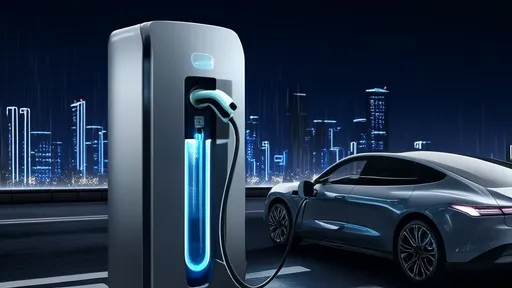
LiDAR: The Visual Revolution of L3 Autonomous Driving

Jun 14, 2025 By

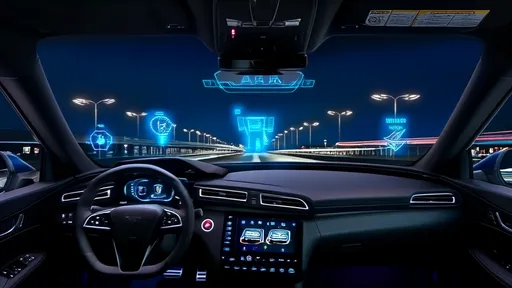
The automotive industry stands at the precipice of a technological revolution, with Level 3 (L3) autonomous driving poised to redefine mobility as we know it. At the heart of this transformation lies lidar technology—a sophisticated sensing system that has emerged as the cornerstone of next-generation self-driving capabilities. Unlike the incremental advancements of recent years, lidar represents a fundamental shift in how vehicles perceive and interact with their environment, enabling true hands-free operation under specific conditions.

Lidar's ascent to prominence marks a decisive victory in the long-running debate over sensor superiority. While cameras and radar have dominated automotive sensing for decades, their limitations in edge cases—poor lighting, obscured objects, or unpredictable scenarios—have kept human drivers firmly in the loop. Lidar's ability to generate precise 3D point clouds of the vehicle's surroundings provides the missing piece that finally allows cars to navigate complex environments with human-like perception. This isn't merely an improvement on existing systems; it's an entirely new paradigm for machine vision.

The transition from Level 2+ to Level 3 autonomy represents more than just technological progress—it's a legal and psychological threshold. For the first time, liability shifts from driver to manufacturer when the system is engaged, creating an unprecedented need for failsafe environmental awareness. Traditional automotive suppliers have scrambled to adapt their radar and camera solutions, but increasingly, OEMs recognize that lidar's wavelength diversity and depth perception offer the only viable path to meeting stringent safety requirements. The recent certification of several L3 systems in regulatory markets has validated this approach, with every approved solution incorporating lidar as its primary sensing modality.

What makes lidar indispensable for L3 autonomy isn't just its precision, but its complementarity with other sensors. Modern implementations fuse lidar data with camera imagery and radar returns, creating a synthetic perception that exceeds the sum of its parts. This sensor fusion proves particularly crucial during transitional moments—when entering tunnels at highway speeds, for instance, where cameras struggle with sudden light changes while lidar maintains consistent performance. The technology's immunity to ambient light conditions allows vehicles to maintain situational awareness through conditions that would challenge even experienced human drivers.

The automotive lidar market has undergone rapid consolidation around a few key architectures. Mechanical spinning units, once the darling of early prototypes, have given way to solid-state and semi-solid-state designs that promise automotive-grade reliability. Innovators have pushed wavelength standards from 905nm to 1550nm, achieving better eye safety margins and longer detection ranges simultaneously. Perhaps most impressively, contemporary systems have reduced costs by nearly an order of magnitude since 2018—from tens of thousands to mere thousands per unit—making series production feasible for premium vehicles.

Software advancements have been just as critical as hardware breakthroughs in enabling L3 capabilities. Modern perception algorithms can now classify and track objects in lidar point clouds with near-human reliability, distinguishing between a plastic bag drifting across the road and a runaway tire with life-or-death consequences. These neural networks leverage temporal data to predict trajectories, understand occlusion patterns, and even anticipate rare edge cases. The combination of high-resolution lidar and sophisticated software creates a perception system that doesn't just see the world as it is, but understands how it changes—a prerequisite for any system that assumes driving responsibility.

Regulatory bodies worldwide have taken notice of this technological leap. The recent wave of L3 approvals in Europe, Japan, and selective U.S. states didn't emerge from regulatory leniency, but from demonstrable evidence that lidar-equipped systems can achieve failure rates orders of magnitude below human drivers in their operational design domains. This validation has created a ripple effect through the insurance industry, with some carriers already crafting specialized policies for L3-enabled vehicles based on actuarial data showing dramatically reduced collision probabilities when systems are engaged.

The implications extend far beyond highway driving. Urban environments—long considered the final frontier for autonomy—are beginning to yield to lidar-powered systems. Early L3 implementations focused primarily on highway traffic jam assist scenarios, but newer iterations handle complex urban intersections, pedestrian-dense areas, and construction zones. This expansion of operational domains suggests that the industry's progression toward higher levels of autonomy may accelerate once lidar achieves full economies of scale.

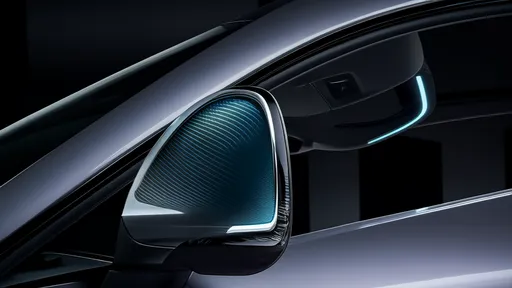
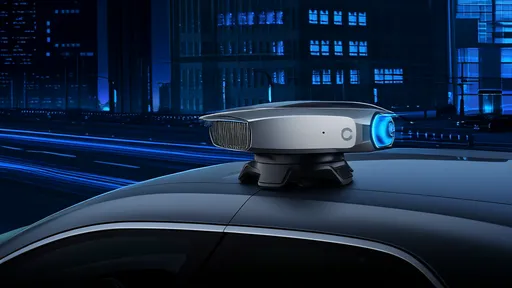
Consumer acceptance represents the next critical hurdle for lidar-based autonomy. Early adopters report high satisfaction with L3 features, particularly in stop-and-go traffic situations where driver fatigue sets in quickly. However, the technology's reliance on visible sensors (unlike radar's hidden installation) has prompted design challenges as automakers balance aerodynamic efficiency with sensor placement. The industry appears to be converging on integrated solutions that embed lidar seamlessly into rooflines or grilles—a necessary evolution for mass-market appeal.

Looking ahead, the trajectory for lidar in automotive applications appears unstoppable. With every major premium automaker now committed to L3 deployments within their next product cycles, and volume manufacturers following closely behind, the technology has cemented its position as the enabling force behind the first true autonomous driving experiences. As production scales and costs continue their downward trend, what begins as a premium feature today may well become standard equipment tomorrow—ushering in an era where driving becomes optional, and mobility becomes fundamentally more accessible and safe.
Recommend Posts
Auto

Electronic Wave: The Paradox of Electric Hypercar Simulation

By /Jun 14, 2025

The automotive world stands at an intriguing crossroads where cutting-edge technology collides with deeply rooted emotional expectations. As electric hypercars silently accelerate toward dominance, manufacturers face an unexpected cultural challenge: how to satisfy the primal human craving for engine roar in vehicles that fundamentally lack combustion. This phenomenon has birthed what industry insiders now call the electric hypercar sound paradox - the artificial recreation of something authentic that no longer physically exists.
Auto

Challenges in False Alarms for Vital Sign Monitoring with Millimeter-Wave Radars

By /Jun 14, 2025

The healthcare technology landscape has witnessed remarkable advancements in recent years, with millimeter-wave (mmWave) radar emerging as a promising tool for continuous, non-contact vital sign monitoring. However, as hospitals and home care providers increasingly adopt these systems, a persistent challenge has come to light: the issue of false alarms. These erroneous alerts not only strain medical resources but also risk desensitizing caregivers to genuine emergencies.
Auto

Acoustic Glass: The New NVH Battlefield in the Era of Electric Vehicles

By /Jun 14, 2025

The automotive industry's rapid shift toward electrification has brought unprecedented challenges and opportunities in noise, vibration, and harshness (NVH) engineering. Among the emerging solutions, acoustic glass has quietly emerged as a critical battleground for automakers striving to redefine cabin comfort in the electric vehicle (EV) era. Unlike traditional internal combustion engine vehicles where engine noise dominates, EVs expose previously masked sounds—wind noise, tire roar, and even the whine of electric motors—making advanced acoustic materials no longer a luxury but a necessity.
Auto

Digital Cockpit: AI Computing Power Allocation of Qualcomm 8295

By /Jun 14, 2025

The automotive industry is undergoing a seismic shift as digital cockpits become the new battleground for innovation. At the heart of this transformation lies the Qualcomm Snapdragon 8295, a chipset that promises to redefine in-vehicle experiences through its formidable AI capabilities. Unlike traditional infotainment systems, the 8295 is designed to handle multiple AI-driven tasks simultaneously, from natural language processing to advanced driver assistance systems (ADAS). But how exactly is its AI compute power allocated, and what does this mean for the future of mobility?
Auto

Automotive-grade Chips: The Dilemma Behind the Race for Computing Power and Process Technology"

By /Jun 14, 2025

The automotive industry's relentless march toward electrification and autonomous driving has triggered an unprecedented demand for high-performance computing chips. Behind the glittering promises of self-driving cars and intelligent cockpits lies a less glamorous but critical challenge: the manufacturing process limitations of automotive-grade semiconductors. While consumer electronics giants routinely push the boundaries of silicon fabrication, automakers and their chip suppliers grapple with a different set of constraints that make the race for computing power far more complex than meets the eye.
Auto

E-Ink Car Body: Legal Boundaries of One-Click Color Change

By /Jun 14, 2025

The automotive world is abuzz with the latest innovation: electronic ink car bodies that allow drivers to change their vehicle's color with the push of a button. This cutting-edge technology, which uses electrophoretic displays similar to those found in e-readers, promises to revolutionize personalization in the automotive industry. However, as with any disruptive advancement, it raises complex legal questions that straddle the line between innovation and regulation.
Auto

Holographic AR-HUD: Augmented Reality on the Windshield

By /Jun 14, 2025

The automotive industry is undergoing a transformative phase, with augmented reality (AR) technology making significant strides in enhancing driver experience. One of the most groundbreaking innovations in this space is the Augmented Reality Head-Up Display (AR-HUD), which projects critical information directly onto the windshield, creating a seamless blend of the digital and physical worlds. Unlike traditional HUDs, AR-HUDs offer dynamic, context-aware overlays that adapt to real-time driving conditions, revolutionizing how drivers interact with their vehicles.
Auto

Steer-by-Wire: Eliminating Mechanical Connections to the Steering Wheel

By /Jun 14, 2025

The automotive industry is undergoing a seismic shift as manufacturers explore radical new technologies to redefine the driving experience. Among these innovations, steer-by-wire systems stand out as one of the most transformative—and controversial—developments in vehicle design. By eliminating the mechanical connection between the steering wheel and wheels, this technology promises unprecedented flexibility in cockpit design while raising fundamental questions about driver engagement and safety.
Auto

The Experience Gap After the Liberalization of Electronic Exterior Mirror Regulations

By /Jun 14, 2025

The automotive industry has been buzzing with excitement since regulators began approving electronic side mirrors, also known as digital or camera-based mirrors, for road use. What was once a futuristic concept reserved for high-end concept cars or sci-fi movies is now becoming a tangible reality. However, as drivers begin to experience this technology firsthand, a noticeable gap is emerging between expectations and reality.
Auto

LiDAR: The Visual Revolution of L3 Autonomous Driving

By /Jun 14, 2025

The automotive industry stands at the precipice of a technological revolution, with Level 3 (L3) autonomous driving poised to redefine mobility as we know it. At the heart of this transformation lies lidar technology—a sophisticated sensing system that has emerged as the cornerstone of next-generation self-driving capabilities. Unlike the incremental advancements of recent years, lidar represents a fundamental shift in how vehicles perceive and interact with their environment, enabling true hands-free operation under specific conditions.
Auto

Vehicle-to-Grid (V2G): Electric Cars Turn into Power Banks

By /Jun 14, 2025

The automotive industry is undergoing a seismic shift, not just in propulsion systems but in the very role cars play in our energy ecosystem. As electric vehicles (EVs) surge in popularity, an innovative technology called Vehicle-to-Grid (V2G) is turning these battery-packed machines into something far more revolutionary than mere transportation devices. Imagine your EV not just consuming electricity but actively participating in powering your home or even stabilizing the local grid during peak demand. This isn't futuristic speculation—it's happening now.
Auto

Fast Charging Damage: Balancing Battery Life and Charging Efficiency

By /Jun 14, 2025

The rapid evolution of fast-charging technology has revolutionized the way we power our devices, from smartphones to electric vehicles. What was once a multi-hour ordeal can now be accomplished in a matter of minutes. Yet, beneath the surface of this convenience lies a complex trade-off between speed and longevity. As consumers increasingly prioritize quick energy top-ups, the long-term health of batteries often becomes an afterthought—until degradation rears its ugly head.
Auto

Electric Off-Road Paradox: Compatibility Design of Water and Electricity

By /Jun 14, 2025

The electric off-road paradox presents one of the most intriguing engineering challenges of our time: how to reconcile the seemingly contradictory demands of deep water fording and high-voltage electrical systems. As automakers push the boundaries of electric vehicle (EV) capability, the traditional weaknesses of internal combustion engines in water are being replaced by new concerns about battery packs, motor controllers, and high-voltage wiring harnesses.
Auto

Smart Solar Car: Lightyear 0's Sunlight Range"

By /Jun 14, 2025

The automotive industry is undergoing a transformative shift, with sustainability at its core. Among the most groundbreaking innovations in this space is the Lightyear 0, a solar-powered vehicle that promises to redefine the concept of long-distance driving. Unlike traditional electric vehicles (EVs) that rely solely on charging stations, the Lightyear 0 harnesses the power of the sun to extend its range, offering a glimpse into a future where cars are not just zero-emission but also energy-independent.
Auto

Battery Swapping Heavy Trucks: A Zero-Carbon Solution for Port Transport

By /Jun 14, 2025

The global push toward decarbonization has reached the heavy-duty transport sector, and nowhere is this more evident than in port operations. Among the innovative solutions gaining traction, battery-swapping electric heavy-duty trucks—commonly referred to as "swap-enabled electric heavy trucks" or "battery-swapping heavy trucks"—are emerging as a game-changer for zero-carbon port logistics. Unlike traditional diesel-powered trucks that dominate port operations today, these vehicles eliminate tailpipe emissions entirely while maintaining the efficiency and uptime required in high-intensity transport environments.
Auto

The Black Market for Battery Recycling: The Grey Industry Chain of Retired Batteries

By /Jun 14, 2025

The global push toward electric vehicles and renewable energy storage has created an unexpected dark underbelly – a sprawling black market for retired batteries. What began as legitimate environmental concerns about proper battery disposal has morphed into a sophisticated gray supply chain spanning continents, with fortunes being made at the expense of both ecological safety and human welfare.
Auto

Ultra-Fast Charging Pile Liquid Cooling Technology: A Must-Learn Course for 800V High-Voltage Platforms

By /Jun 14, 2025

The automotive industry's rapid shift toward electrification has brought ultra-fast charging technology into sharp focus. As electric vehicles (EVs) adopt 800V high-voltage platforms to enable quicker charging times, the supporting infrastructure must evolve to meet these demanding new requirements. Liquid cooling technology has emerged as the critical enabler for next-generation ultra-fast charging piles (ultra-chargers), solving thermal management challenges that air cooling simply cannot address at these extreme power levels.