The automotive industry's relentless march toward electrification and autonomous driving has triggered an unprecedented demand for high-performance computing chips. Behind the glittering promises of self-driving cars and intelligent cockpits lies a less glamorous but critical challenge: the manufacturing process limitations of automotive-grade semiconductors. While consumer electronics giants routinely push the boundaries of silicon fabrication, automakers and their chip suppliers grapple with a different set of constraints that make the race for computing power far more complex than meets the eye.
Unlike their consumer counterparts, automotive chips must withstand extreme temperatures, constant vibration, and decades of reliable operation. These stringent requirements force chip designers to make difficult trade-offs between cutting-edge process nodes and proven reliability. The industry's gold standard - ISO 26262 functional safety certification - adds another layer of complexity to chip development, often necessitating conservative design choices that lag behind the latest semiconductor manufacturing breakthroughs.
The paradox becomes evident when examining current autonomous driving platforms. While a flagship smartphone might boast a 3nm processor, most advanced driver-assistance systems (ADAS) still rely on 16nm or 28nm chips. This isn't because automakers lack ambition; rather, the automotive supply chain prioritizes long-term availability and manufacturing maturity over raw performance metrics. A chip node that's considered obsolete in the consumer world might represent the cutting edge for automotive applications.
Thermal considerations present another formidable barrier. The operating environment of an automotive chip differs radically from that of a data center or mobile device. Under-hood temperatures can exceed 150°C, while winter conditions might plunge below -40°C. Such extremes wreak havoc on the delicate transistors of advanced process nodes, which are optimized for the controlled climates of smartphones and cloud servers rather than the punishing conditions of vehicle operation.
Supply chain dynamics further complicate the picture. The automotive industry's just-in-time manufacturing model collides with the semiconductor industry's long lead times and capacity constraints. When a single vehicle might require over 1,000 chips across various systems, the industry cannot afford to constantly chase the latest process node. Instead, automakers prefer to lock in proven designs for multi-year production cycles, creating a natural inertia against rapid technological turnover.
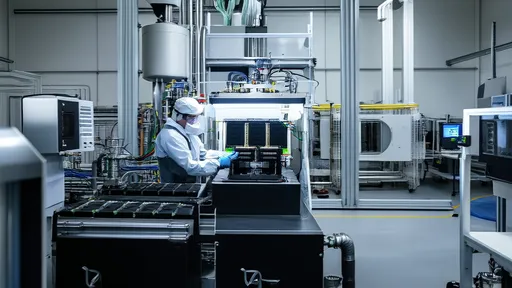
This conservatism manifests in the testing and qualification processes that can stretch for years. Where a consumer device chip might undergo months of validation, automotive-grade chips require exhaustive reliability testing across temperature cycles, power variations, and electromagnetic interference scenarios. The cost of failure - both in terms of safety recalls and brand reputation - makes automakers understandably risk-averse when adopting new semiconductor technologies.
Yet the computing demands continue to escalate. The transition from Level 2 to Level 4 autonomous driving represents not an incremental step but an exponential leap in processing requirements. Sensor fusion algorithms, neural network inference, and real-time path planning all consume tremendous computational resources. This creates intense pressure to adopt more advanced nodes despite the technical and supply chain challenges.
Some chipmakers are responding with innovative packaging approaches that combine different process nodes on a single chip. By partitioning functions - using mature nodes for critical safety systems while employing cutting-edge nodes for AI acceleration - these designs attempt to square the circle of performance and reliability. However, such heterogeneous integration introduces new challenges in thermal management and signal integrity that automotive engineers must carefully navigate.
The industry's roadmap suggests a gradual rather than revolutionary transition to advanced nodes. While 7nm designs are beginning to appear in premium vehicles, widespread adoption across mainstream models will take years. In the interim, chip architects are employing clever techniques like hardware accelerators and domain-specific architectures to extract more performance from existing process technologies.
This measured approach reflects the fundamental difference between consumer and automotive priorities. Where smartphone makers compete on benchmark scores and bragging rights, automakers must balance innovation with decades-long product lifecycles and absolute reliability requirements. The computing power race in automotive isn't just about who reaches the finish line first, but who can sustain the pace for the long haul.
Looking ahead, the industry faces a delicate balancing act. As software-defined vehicles become the norm, the pressure to deliver continuous performance improvements will only intensify. Yet the physical and economic constraints of automotive-grade semiconductor manufacturing won't disappear overnight. The winners in this space will be those who can innovate within these constraints rather than those who simply chase process node leadership.
The true test of automotive computing may ultimately lie not in teraflop counts or process node superiority, but in achieving the perfect synthesis of performance, reliability, and longevity. As vehicles transform into rolling data centers, the industry's ability to navigate these competing demands will determine not just the pace of innovation, but the very safety and viability of next-generation mobility solutions.

By /Jun 14, 2025

By /Jun 14, 2025

By /Jun 14, 2025
By /Jun 14, 2025
By /Jun 14, 2025

By /Jun 14, 2025

By /Jun 14, 2025
By /Jun 14, 2025

By /Jun 14, 2025

By /Jun 14, 2025

By /Jun 14, 2025

By /Jun 14, 2025

By /Jun 14, 2025

By /Jun 14, 2025
By /Jun 14, 2025

By /Jun 14, 2025

By /Jun 14, 2025