The automotive industry is undergoing a seismic shift as manufacturers explore radical new technologies to redefine the driving experience. Among these innovations, steer-by-wire systems stand out as one of the most transformative—and controversial—developments in vehicle design. By eliminating the mechanical connection between the steering wheel and wheels, this technology promises unprecedented flexibility in cockpit design while raising fundamental questions about driver engagement and safety.
At its core, steer-by-wire represents more than just an engineering tweak; it's a complete reimagining of how drivers interact with their vehicles. Traditional steering systems, which have relied on physical linkages for over a century, translate the driver's input through a series of shafts, gears, and hydraulics. The new approach replaces all this hardware with electronic sensors, actuators, and control units that communicate via high-speed networks. When you turn the wheel in a steer-by-wire vehicle, you're not mechanically moving the tires—you're sending digital commands that a computer interprets and executes.
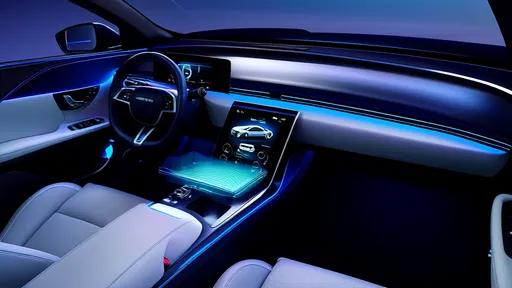
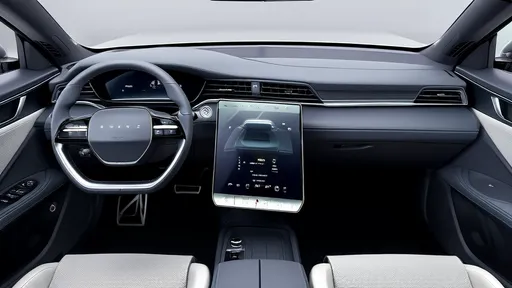
Nissan has emerged as one of the technology's most vocal proponents, having introduced the world's first production steer-by-wire system in its Infiniti Q50 sedan nearly a decade ago. Their system retains a mechanical backup for safety, but newer implementations from companies like Toyota and Lexus have begun exploring fully digital architectures. These designs completely remove the steering column, creating space for innovative interior layouts and advanced driver assistance features that would be impossible with conventional systems.
The benefits of this transition extend far beyond packaging advantages. Without the friction and inertia inherent in mechanical linkages, engineers can program steering feel with remarkable precision. A luxury sedan might offer light, effortless steering for city driving, while a sports car could simulate the weighty, direct feedback of a race-bred hydraulic system—all through software adjustments. This programmability also enables advanced safety features; the system can automatically correct steering inputs to prevent lane departures or compensate for crosswinds without any physical resistance from the driver.
Perhaps the most intriguing possibility lies in the decoupling of steering ratio from mechanical constraints. Traditional vehicles must compromise between quick, responsive steering at speed and manageable low-speed maneuverability. Steer-by-wire systems can vary their ratio dynamically—providing a relaxed, stable feel on highways while switching to ultra-direct response when parking. Some concepts even explore non-linear relationships where small inputs produce gentle corrections but larger movements trigger more aggressive responses, potentially reducing driver fatigue during long journeys.
However, the technology faces significant psychological and regulatory hurdles. Many drivers remain skeptical about surrendering the tactile connection to the road that mechanical steering provides. There's also the specter of system failures—while redundant power supplies and multiple ECUs can mitigate electronic faults, the absence of a mechanical backup in pure steer-by-wire implementations makes some engineers nervous. Regulatory bodies worldwide are still grappling with certification standards for these systems, particularly regarding failure modes and cybersecurity risks that could theoretically allow remote hijacking of vehicle control.
The racing world has become an unexpected proving ground for these technologies. Formula 1 teams have experimented with steer-by-wire systems that allow drivers to adjust handling characteristics mid-lap, while extreme off-road vehicles benefit from the ability to completely redefine steering geometry for different terrain. These high-performance applications demonstrate the technology's potential while helping to validate its reliability under punishing conditions.
Looking ahead, the true revolution may come when steer-by-wire converges with autonomous driving technologies. Without the need to accommodate human drivers, future vehicles could eliminate steering wheels altogether—or implement retractable systems that disappear when not in use. This vision is already taking shape in concepts like Mercedes' Vision AVTR, where the entire cockpit transforms based on whether the car is in autonomous or manual mode. The flexibility could enable radical new vehicle architectures where interiors become reconfigurable spaces rather than fixed arrangements of controls.
As with any disruptive technology, widespread adoption will depend on overcoming both technical challenges and consumer skepticism. Early adopters may embrace the customization possibilities and space-saving benefits, while traditionalists will likely cling to the familiar feedback of mechanical steering. Automakers face the delicate task of introducing these systems gradually—perhaps through hybrid implementations that maintain limited mechanical connections—while proving their reliability beyond doubt. The transition won't happen overnight, but the potential rewards in design freedom, safety enhancements, and driving experience personalization make steer-by-wire one of the most compelling narratives in automotive innovation.
By /Jun 14, 2025

By /Jun 14, 2025
By /Jun 14, 2025
By /Jun 14, 2025
By /Jun 14, 2025
By /Jun 14, 2025
By /Jun 14, 2025
By /Jun 14, 2025
By /Jun 14, 2025
By /Jun 14, 2025
By /Jun 14, 2025

By /Jun 14, 2025
By /Jun 14, 2025

By /Jun 14, 2025
By /Jun 14, 2025
By /Jun 14, 2025
By /Jun 14, 2025