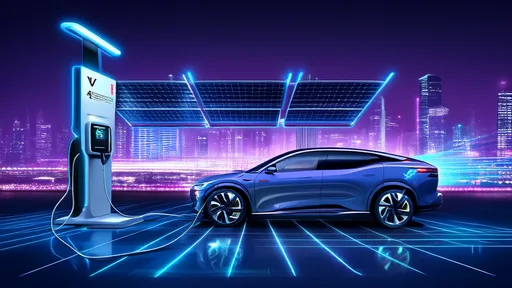
The automotive industry's rapid shift toward electrification has brought ultra-fast charging technology into sharp focus. As electric vehicles (EVs) adopt 800V high-voltage platforms to enable quicker charging times, the supporting infrastructure must evolve to meet these demanding new requirements. Liquid cooling technology has emerged as the critical enabler for next-generation ultra-fast charging piles (ultra-chargers), solving thermal management challenges that air cooling simply cannot address at these extreme power levels.
Thermal Challenges at 800V and Beyond
Traditional 400V architecture charging systems already generate substantial heat during operation, but the move to 800V platforms nearly quadruples the thermal management challenge. When pushing charging power beyond 350kW - with some next-gen systems targeting 500kW or more - the heat generated can quickly degrade components, reduce efficiency, and even pose safety risks if not properly managed. Conventional air cooling methods that sufficed for lower-power chargers become completely inadequate at these extreme power levels.
The physics are unforgiving: higher voltages and currents mean more resistive losses (I²R losses) in cables and connectors. These losses manifest as heat that must be dissipated to prevent overheating. Without effective cooling, charging speeds must be throttled back to safe levels, defeating the purpose of installing ultra-fast chargers in the first place.
How Liquid Cooling Enables Ultra-Fast Charging
Liquid cooling systems address these thermal challenges through several key mechanisms. By circulating a specialized coolant through channels in the charging cable, connector, and critical power electronics components, heat can be actively removed rather than relying on passive air convection. This active cooling allows the system to maintain optimal operating temperatures even during continuous high-power operation.
The cooling liquid - typically a dielectric fluid with high thermal conductivity - absorbs heat from hotspots and transports it to a heat exchanger where it can be dissipated safely. This closed-loop system is far more efficient than air cooling, with heat transfer coefficients orders of magnitude higher. The result is the ability to sustain charging currents of 500A or more without thermal derating.
Cable and Connector Innovations
Perhaps the most visible application of liquid cooling is in the charging cables themselves. Ultra-fast charging requires thick copper conductors to handle the high currents, which would normally result in heavy, inflexible cables that are difficult for users to handle. Liquid cooling allows for smaller conductor cross-sections by keeping them cool, resulting in cables that are both lighter and more flexible while still handling extreme power levels.
The charging connector represents another critical application. Traditional connectors rely on thermal mass and limited air flow to manage heat, which becomes inadequate at 800V/500A levels. Liquid-cooled connectors actively remove heat from the contact points, preventing temperature rise that could lead to resistance increases or even contact welding over time.
Power Electronics Cooling
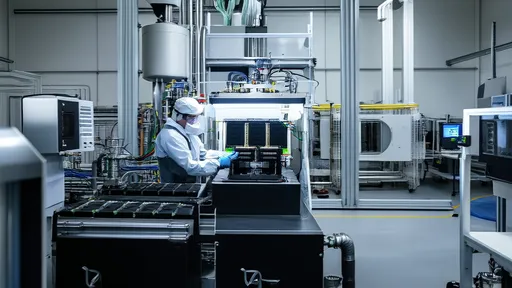
Beyond the cable assembly, the charging pile's internal power electronics - including the AC/DC converter, DC/DC converter, and supporting circuitry - generate tremendous heat during operation. Liquid cooling plates can be directly attached to power semiconductor modules and other heat-generating components, maintaining junction temperatures within safe operating limits. This not only improves reliability but also allows components to operate closer to their maximum ratings when needed.
Modern wide-bandgap semiconductors (SiC and GaN) that enable efficient high-voltage operation are particularly dependent on effective thermal management. While these devices offer superior efficiency compared to traditional silicon IGBTs, their high power density makes thermal management absolutely critical to realizing their full potential.
System Reliability and Longevity
The benefits of liquid cooling extend beyond just enabling higher power levels. By maintaining components at optimal temperatures, liquid cooling significantly improves system reliability and service life. Electrolytic capacitors, for instance, see their lifespan halved for every 10°C increase in operating temperature above their rating. Keeping these and other temperature-sensitive components cool can mean the difference between a charging pile that lasts 5 years versus one that lasts 10+ years.
This reliability factor is particularly important for commercial charging station operators who need to maximize uptime and minimize maintenance costs. Liquid-cooled systems typically demonstrate much higher meantime between failures (MTBF) figures compared to their air-cooled counterparts.
Energy Efficiency Advantages
Liquid cooling also contributes to overall system efficiency in several ways. First, by reducing resistive losses in cables and connectors through temperature control. Second, by allowing power electronics to operate at peak efficiency points rather than being derated due to thermal constraints. Third, through the ability to recover and potentially reuse waste heat in some system designs.
While the cooling system itself consumes some energy, the net effect is typically a significant improvement in overall energy efficiency compared to air-cooled systems operating at similar power levels. This translates to lower operating costs and reduced energy waste - important considerations as charging networks scale up globally.
Installation Flexibility
Another often-overlooked advantage of liquid-cooled ultra-fast chargers is their installation flexibility. Because the cooling system actively removes heat rather than relying on ambient air flow, these chargers can be installed in more confined spaces or even indoors where air-cooled systems would be impractical. The reduced cable weight also simplifies overhead mounting options that might be challenging with conventional high-power cables.
This flexibility is particularly valuable in urban environments where space is at a premium and traditional high-power charging installations might require substantial real estate for cooling infrastructure.
Future-Proofing Charging Infrastructure
As automakers push toward even higher voltage platforms (some already discussing 900V or 1000V systems) and charging power levels continue climbing toward 1MW, liquid cooling will become not just advantageous but absolutely essential. The thermal challenges scale non-linearly with increasing voltage and current, making advanced cooling solutions mandatory rather than optional.
Investing in liquid-cooled charging infrastructure today provides a path for incremental upgrades as these higher-power systems become available. Many liquid cooling systems can be adapted to handle increased thermal loads through pump upgrades or enhanced heat exchangers, protecting the initial infrastructure investment.
Implementation Challenges
Despite its clear advantages, liquid cooling does introduce some implementation challenges that must be addressed. The cooling system adds complexity, requiring pumps, reservoirs, heat exchangers, and monitoring systems. Leak prevention and detection become critical design considerations, particularly for the cable and connector assemblies that experience frequent movement and mating cycles.
Maintenance requirements are somewhat higher than for air-cooled systems, though modern designs are increasingly reliable and often incorporate predictive maintenance features that alert operators to potential issues before they cause downtime.
Industry Adoption Trends
The industry is rapidly moving toward liquid cooling as the standard for high-power charging systems. Major charging equipment manufacturers have all introduced liquid-cooled solutions, and network operators are prioritizing these systems for new high-power installations. Automakers developing 800V platform vehicles are working closely with charging providers to ensure compatibility and optimal performance.
Standardization efforts are also underway to ensure interoperability between different manufacturers' liquid-cooled systems, particularly for the cable and connector assemblies. This will be crucial for creating a seamless charging experience as networks expand.
Environmental Considerations
Liquid cooling systems must be designed with environmental impact in mind. The coolants used must be non-toxic and preferably biodegradable in case of leaks. Many modern systems use food-grade or similarly benign fluids that pose minimal environmental risk while still offering excellent thermal performance.
Some systems are exploring phase-change cooling approaches that can provide even greater thermal performance while using environmentally neutral working fluids. These advanced systems may become more prevalent as power levels continue to increase.
The Path Forward
As the EV market matures and consumers demand charging experiences comparable to refueling conventional vehicles, ultra-fast charging will become the expectation rather than the exception. Liquid cooling technology stands as the key enabler that makes these fast charging times possible while maintaining safety, reliability and efficiency.
The transition to 800V vehicle platforms has effectively made liquid cooling a requirement rather than an option for supporting charging infrastructure. Charging networks that invest in this technology today will be well positioned to meet growing demand and future power level increases, while those clinging to older air-cooled approaches may find themselves unable to compete in the high-power charging landscape of the near future.
By /Jun 14, 2025

By /Jun 14, 2025

By /Jun 14, 2025
By /Jun 14, 2025
By /Jun 14, 2025
By /Jun 14, 2025
By /Jun 14, 2025
By /Jun 14, 2025

By /Jun 14, 2025

By /Jun 14, 2025
By /Jun 14, 2025

By /Jun 14, 2025

By /Jun 14, 2025
By /Jun 14, 2025
By /Jun 14, 2025

By /Jun 14, 2025
By /Jun 14, 2025